
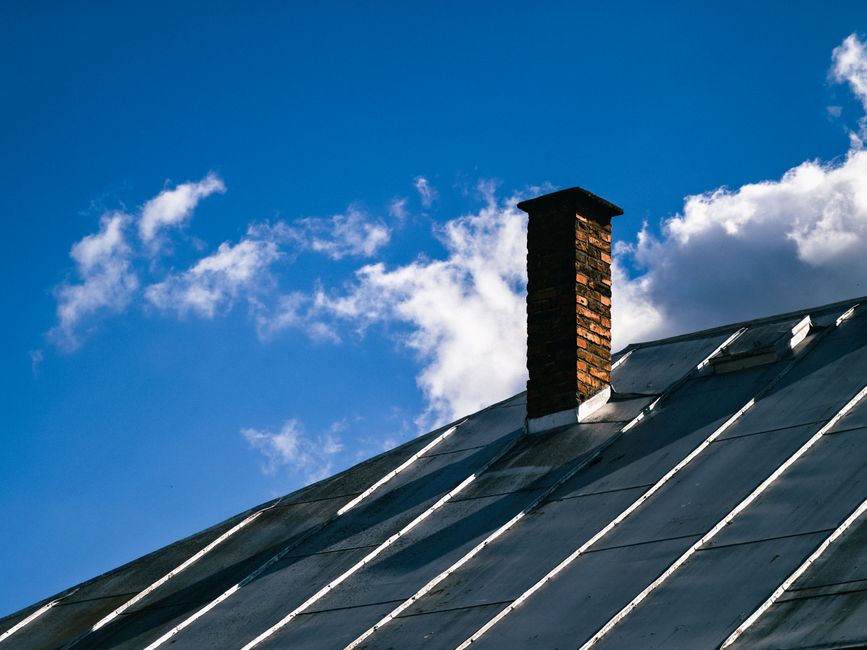
Roof flashing is the thin, shaped material installed around roof edges, joints, openings, and wall connections to direct water away from vulnerable areas. Although flashing is easy to overlook from the ground, it is one of the roof system’s main defenses against leaks, wood rot, mold, and concealed structural damage.
What is roof flashing?
Roof flashing is a water-shedding barrier made from materials such as coated steel, aluminum, copper, or other corrosion-resistant metals. Some roofing systems also use specialized membrane materials in areas where flexible protection is needed.
Flashing does not usually cover large portions of the roof. Instead, it protects the places where water is most likely to collect, change direction, or work its way beneath roofing materials. These locations include:
- Chimneys and masonry walls
- Plumbing vent pipes
- Skylights and roof windows
- Valleys where two roof slopes meet
- Roof-to-wall intersections
- Dormers and sidewalls
- Roof edges and eaves
- Changes in roof slope or direction
- Areas around heating, ventilation, or other penetrations
The purpose is simple: water should be guided over the roof covering and away from the building, rather than allowed to enter a joint or opening.
Why does flashing matter so much?
Flashing matters because roofing materials alone cannot reliably seal every joint and transition. Shingles, metal panels, or other roof coverings are designed to shed water across broad surfaces, but they need additional protection where one surface meets another.
A small flashing failure can allow water to travel behind siding, under shingles, or into roof sheathing. The visible drip inside a home may appear far from the original entry point because water can move along rafters, roof decking, insulation, and wall framing before becoming noticeable.
Unaddressed moisture can lead to:
- Stained ceilings or walls
- Damp insulation
- Soft or deteriorated roof decking
- Rotted framing around openings
- Peeling paint or damaged drywall
- Mold growth in persistently damp areas
- Corrosion of fasteners and metal components
- Higher repair costs when damage remains hidden
The roof may still look fairly sound from the ground while a flashing-related leak is already affecting materials beneath the surface.
Where is flashing found on a typical roof?
Different locations require different flashing designs. The shape, overlap, fastening method, and relationship to surrounding roofing materials all affect performance.
Step flashing is commonly used where a sloped roof meets a vertical wall. Individual pieces are layered with the shingles so water is directed down and away from the wall. It is often found beside dormers, upper-level walls, and additions.
Counterflashing is installed over or into a vertical masonry or wall surface to protect the upper edge of another flashing component. Chimneys frequently use both base flashing and counterflashing.
Valley flashing protects the channel where two roof slopes meet. Valleys receive concentrated water flow, leaves, ice, and roof debris, making correct installation especially important.
Pipe flashing surrounds plumbing vent pipes. A flexible collar or formed metal base seals the penetration while allowing the pipe to pass safely through the roof.
Drip edge flashing is installed along roof edges to help direct water into gutters or away from fascia and roof sheathing. It also helps reduce the chance that runoff will reach exposed wood.
Kick-out flashing helps divert water at the lower end of a roof-to-wall intersection so runoff does not pour behind siding. Without it, water can collect at the wall corner and damage the exterior or framing.
What causes flashing to fail?
Flashing can fail because of age, weather exposure, poor installation, incompatible materials, or damage during later roofing work.
In East Greenbush, seasonal changes can be particularly demanding on roof details. Snow, ice, wind-driven rain, repeated freezing and thawing, and summer heat all cause roofing materials to expand, contract, shift, or weather at different rates. Ice may also push against exposed edges or collect near roof transitions.
Common causes of failure include:
- Rust, corrosion, or pinholes in metal
- Loose or missing fasteners
- Sealant that has cracked or separated
- Flashing installed on top of roofing when it should be integrated beneath it
- Improper overlaps that allow water to run uphill
- Damaged masonry or mortar around chimney flashing
- Debris collecting in valleys
- Roofing layers installed over deteriorated older flashing
- Punctures caused by foot traffic, tools, or falling branches
- Ice movement that bends or separates exposed metal
Sealant can be useful as part of a flashing system, but it should not be treated as a substitute for correctly shaped and layered flashing. Sealants weather over time and may hide, rather than solve, an underlying installation problem.
How can a homeowner spot a flashing problem?
Some warning signs appear inside the home, while others can be observed from the ground or during routine maintenance.
Look for:
- Brown or yellow ceiling stains near exterior walls
- Dampness around chimneys, skylights, or upper-floor windows
- Water marks that appear after wind-driven rain
- Loose siding near a roof intersection
- Rust-colored streaks on exterior masonry
- Missing or bent metal at roof edges
- Cracked sealant around visible penetrations
- Shingles that lift near valleys, walls, or roof openings
- Rot or staining on fascia and trim
- Granules or pieces of roofing material collecting below a roof transition
A leak that appears only during heavy rain or after snow melts may still indicate a flashing issue. Intermittent leaks are often more difficult to trace because the entry point may dry before an inspection occurs.
Is roof flashing required by building code?
New York’s residential building requirements include flashing at roof-to-wall intersections, changes in roof slope or direction, roof openings, and other locations where moisture could enter. The code also addresses corrosion resistance and the way flashing must be installed to prevent water from entering walls and roof assemblies.
Code requirements are a baseline, not a guarantee that every existing roof detail is performing well. Older homes may have been built under earlier requirements, modified during additions, or repaired with materials that do not integrate properly with the original system.
For replacement work, the relevant requirements can depend on the roof design, the type of covering, the extent of the work, and the currently adopted state code. Local permitting questions are best handled through the applicable building department, especially when work involves structural changes, additions, or major roof replacement.
Can flashing be repaired without replacing the whole roof?
Sometimes. If the surrounding roof covering is in good condition and the problem is limited to a small area, a repair may involve replacing a damaged section, correcting an overlap, securing loose metal, or rebuilding flashing around a penetration.
A larger replacement may be more practical when flashing is rusted throughout, buried beneath several roofing layers, installed incorrectly, or connected to deteriorated decking or framing. Removing only the visible portion may leave hidden defects in place.
The key question is not simply whether metal is present. The important questions are whether water is being directed correctly, whether the layers overlap in the right order, and whether the flashing remains connected to sound roofing and wall materials.
What should be checked after a major storm?
After strong wind, heavy rain, or significant snow and ice, a ground-level inspection can identify obvious concerns without putting anyone on the roof. Check for missing shingles, displaced metal, fallen branches, damaged gutters, and new interior stains.
Avoid climbing onto a wet, icy, or steep roof. Roof edges, valleys, and flashing may be unstable after storm damage. Any active leak near electrical fixtures, attic wiring, or heavily saturated ceilings should be treated as a safety concern rather than a cosmetic issue.
Regular attention to roof transitions and penetrations helps identify small problems before water reaches the hidden parts of the building. Flashing is not the most visible part of a roof, but it often determines how well the entire system handles the region’s rain, snow, ice, and seasonal movement.
