
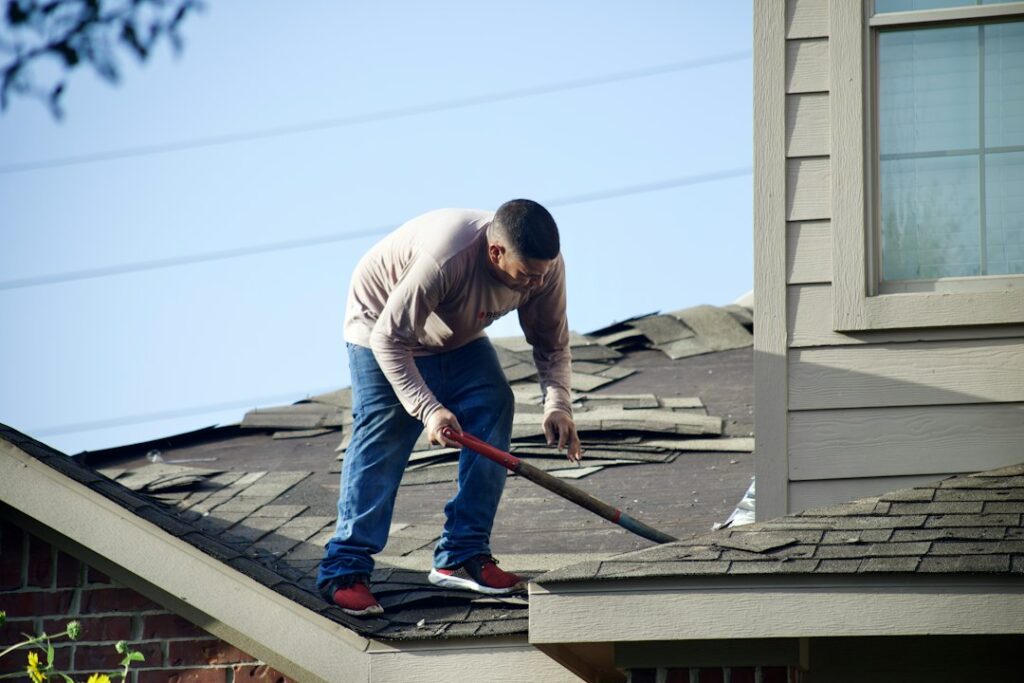
Choosing a roofing contractor is less about finding the lowest price and more about verifying who will perform the work, how the job will be managed, and whether the proposed repairs fit the condition of the roof. A careful selection process can help homeowners avoid incomplete work, unclear warranties, unexpected charges, and repairs that fail during the next severe weather event.
What should be checked before contacting a contractor?
Start by identifying the roofing problem as clearly as possible, but do not assume the cause is obvious. A ceiling stain may result from a roof leak, flashing failure, ice-related damage, inadequate ventilation, or water entering around a chimney or roof penetration. The visible damage inside the home may not be directly below the entry point.
Before requesting proposals, gather:
- The approximate age of the roof
- Any previous repair records
- Photos of interior stains or visible exterior damage
- Information about recent wind, snow, ice, or heavy rain
- Whether the roof has one layer of shingles or multiple layers
- Any concerns about attic moisture, drafts, or unusually high heating costs
A contractor should inspect the roof and attic when appropriate rather than pricing the work from a distant view or a few photographs. For safety reasons, homeowners should not climb onto a steep, wet, icy, or damaged roof to investigate it themselves.
How can a homeowner verify a roofing contractor?
A trustworthy contractor should be willing to provide basic business and insurance information in writing. Verify that the company is properly registered to operate where required, carries liability insurance, and has workers’ compensation coverage for employees. If the contractor uses subcontractors, ask who is responsible for confirming their coverage.
Useful questions include:
- How long has the business operated under its current name?
- Who will supervise the project each day?
- Will employees or subcontractors perform the work?
- Can proof of insurance be provided?
- Who handles permits or required inspections?
- What happens if hidden damage is found after removal begins?
- How are customer complaints or warranty issues handled?
A business listing, online review, or polished website is not proof of workmanship. Reviews can provide clues about communication and reliability, but they should not replace documentation, references, or a detailed written agreement.
What should a roofing proposal include?
A useful proposal should describe the work precisely enough that another qualified contractor could understand what is being compared. “Replace roof” is not detailed enough for a major home improvement project.
The written proposal should identify:
- The areas to be repaired or replaced
- The type and approximate quantity of roofing materials
- Whether old roofing will be removed
- The condition and replacement of roof decking, if needed
- Underlayment, flashing, ventilation, and ice-dam protection
- Drip edge and other edge details
- Cleanup, disposal, and protection of landscaping
- The expected start window and estimated duration
- Payment stages and the final amount
- Workmanship and manufacturer warranties
- Procedures for changes or concealed conditions
In East Greenbush, winter weather, freeze-thaw cycles, heavy snow, and ice buildup can expose weaknesses in flashing, drainage, ventilation, and roof edges. A proposal should explain how those areas will be addressed, not simply list a shingle color.
How many roofing estimates are reasonable?
For a full replacement or substantial repair, comparing two or three detailed proposals is usually more useful than collecting a large number of quick prices. The goal is not to select the lowest figure automatically. It is to understand why the proposals differ.
A lower bid may exclude removal, replacement of damaged decking, ventilation improvements, permits, disposal, or necessary flashing work. A higher bid may include more complete preparation or better documentation. Ask each contractor to price comparable materials and scope so the comparison is fair.
Be cautious if a contractor:
- Pressures the homeowner to sign immediately
- Requests a large cash payment before work begins
- Offers a price without inspecting the roof
- Refuses to provide a written scope
- Claims that insurance will cover work without reviewing the damage
- Uses vague language about materials or warranties
- Suggests covering a sound roof without explaining why
A reputable contractor should allow time to review the proposal and ask questions.
What roofing materials are suitable for local homes?
Asphalt shingles are common because they are widely available, relatively economical, and offered in several performance grades. However, the appropriate material depends on roof slope, ventilation, existing construction, exposure to wind, and the homeowner’s expected service life.
The product itself is only part of the system. Installation details often determine whether the roof performs well. Important components include:

- Properly fastened shingles
- Underlayment beneath the roof covering
- Flashing around chimneys, walls, skylights, and vents
- Reliable ventilation at intake and exhaust points
- Secure treatment of valleys and roof edges
- Adequate drainage through gutters and downspouts
A premium shingle will not compensate for poor flashing or inadequate installation. Conversely, a standard material installed correctly may perform reliably when it is suitable for the structure.
How do warranties really work?
Roofing warranties generally involve two separate promises: the manufacturer’s warranty for the roofing product and the contractor’s workmanship warranty. They are not interchangeable.
A manufacturer may limit coverage to defects in the roofing material, while installation errors may be excluded. The contractor’s workmanship warranty may also contain exclusions, time limits, maintenance requirements, or conditions involving ventilation and storm damage.
Before signing, ask:
- What does the manufacturer warranty cover?
- What installation problems are covered by the contractor?
- Who is responsible for labor if a material defect is confirmed?
- Are warranties transferable if the house is sold?
- What maintenance or documentation is required?
- Are wind, ice, animals, tree damage, or poor attic ventilation excluded?
Keep the final contract, invoices, product information, photographs, and warranty documents with the home’s maintenance records.
What should happen during the project?
A well-managed roofing project should include clear communication about access, timing, noise, debris, and weather delays. Roofing work can be disruptive, especially when materials are removed and installed over several days.
Before work starts, clarify:
- Where materials will be placed
- How vehicles and outdoor equipment should be moved
- How flower beds, siding, windows, and paved areas will be protected
- How nails and debris will be collected
- Whether attic or interior access is needed
- How rain or high winds will affect the schedule
- Who will inspect the completed work
Weather deserves special attention in the Northeast. Shingles, sealants, underlayments, and adhesives may have temperature-related installation limits. A delay caused by unsafe conditions is generally preferable to rushing work during rain, strong winds, or freezing conditions.
What are signs that the finished work is complete?
After installation, the contractor should review the completed scope and explain any changes. Look for consistent shingle lines, properly sealed flashing, secure vents, clean roof edges, and orderly gutters. Ground-level inspection cannot reveal every issue, but loose materials, exposed fasteners, damaged siding, or large amounts of debris should be addressed promptly.
The final payment should follow the written agreement rather than pressure from the crew. Obtain copies of receipts, warranties, permits or inspection records when applicable, and photographs of areas that are no longer visible from the ground.
The right contractor is not necessarily the one with the most advertisements or the shortest schedule. A sound choice is a contractor who communicates clearly, documents the work, explains limitations, carries appropriate insurance, and provides a proposal detailed enough to protect both the homeowner and the project.
